Mastering the Nutrition Facts Label
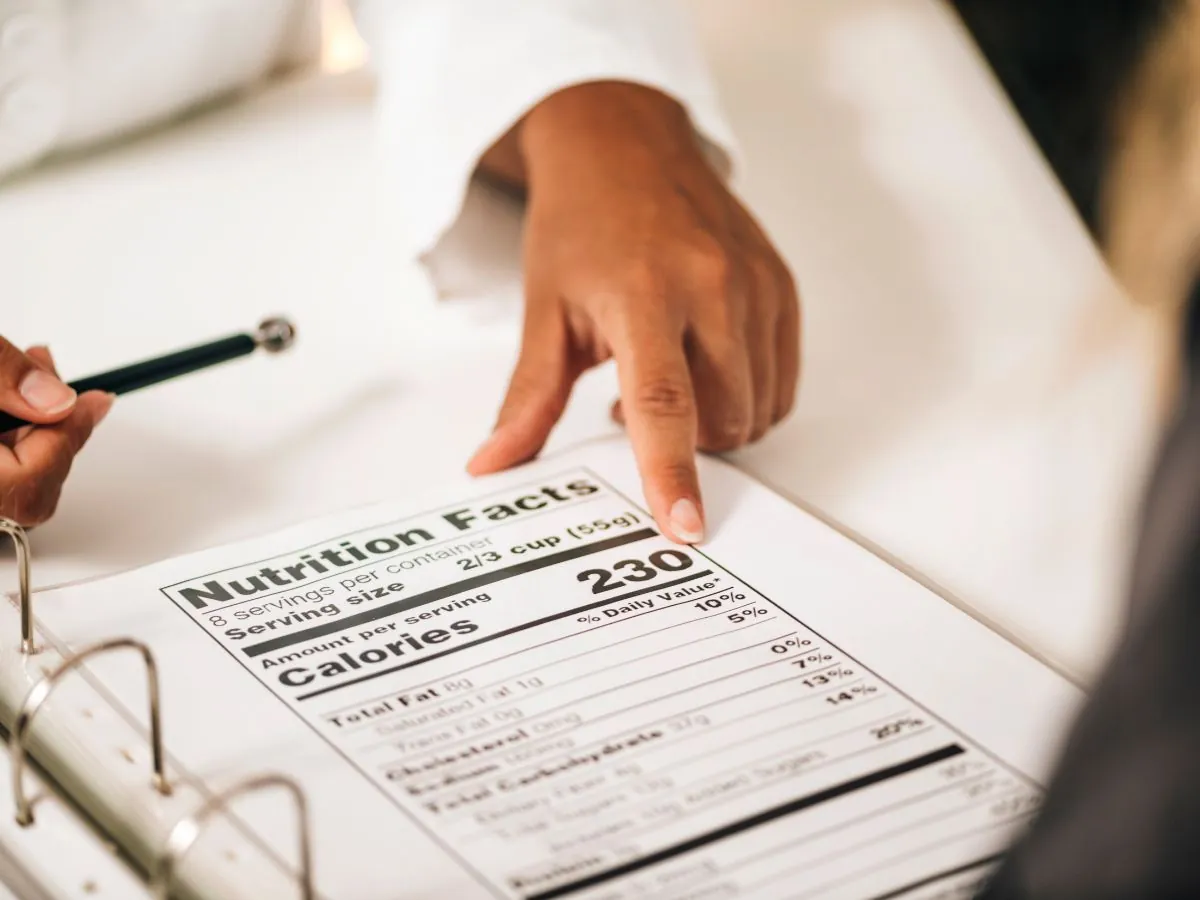
The nutrition facts label shows how food fits into daily eating. It lists serving size, calorie counts, key nutrients, and % daily value to support healthy eating and weight management.
Identifying Serving Size and Servings Per Container
The serving size sits at the top of the nutrition facts label. It shows the amount people usually eat at one time. It does not tell anyone how much they should eat.
Servings per container matter just as much. A package may look like one portion, but it can hold two or more servings. If someone eats the full package, they must multiply all numbers by the number of servings.
Portion sizes affect calorie intake and nutrient totals. Large portions raise calorie counts fast and can make weight management harder. The U.S. Food and Drug Administration explains how to read serving details on the Nutrition Facts label.
Interpreting Calories Per Serving
Calories per serving show how much energy one serving provides. The label lists this number in bold to make it easy to find. Eating more than one serving increases calories fast.
Calorie needs vary by age, size, and activity. A food with 280 calories per serving becomes 560 calories if someone eats two servings. This math applies to all nutrients too.
Calorie counts help with daily planning. People who track calories can better match intake to activity. This step supports steady energy levels and long-term healthy eating.
Understanding % Daily Value and Nutrients
The percent daily value, also written as %DV, shows how much a nutrient adds to a full day of eating. The DV uses a 2,000-calorie diet as a guide.
Use this simple rule:
%DV Level | Meaning |
|---|
5% DV | Low |
20% DV | High |
Low %DV helps limit nutrients like sodium or saturated fat. High %DV helps boost beneficial nutrients. The %DV removes guesswork and helps compare foods with similar serving sizes.
Making Sense of Key Nutrients to Limit and Favor
Some nutrients need limits. These include saturated fat, trans fat, sodium, cholesterol, and added sugars. Too much of these can raise health risks over time. Total sugars include natural and added sugars, so added sugars deserve close attention.
Other nutrients support nutrient needs. These include dietary fiber, protein, vitamins and minerals like calcium, potassium, vitamin D, and iron. Fiber aids digestion. Calcium and vitamin D support bones. Potassium helps control blood pressure.
Balanced choices come from limiting risk nutrients while favoring helpful ones. This approach keeps meals practical and aligned with daily goals.
Analyzing Ingredient Lists and Food Label Claims
Ingredient lists and label claims shape how people judge packaged foods. Careful reading helps spot added sugar s, unhealthy fats, and claims that do not reflect the full nutrition picture.
Deciphering the Ingredient List
The ingredient list on food labels shows every item used to make the product. Manufacturers list ingredients by weight, from most to least. If sugar or refined grains appear first, the food relies heavily on them.
Whole foods use short, clear lists. Processed foods and highly processed items often include preservatives and added sweeteners. Look for whole grains instead of refined grains to get more fiber and nutrients.
Helpful checks
- Fewer ingredients often mean less processing.
- Recognizable foods beat vague additives.
- Oils matter. Avoid partially hydrogenated oils and hydrogenated oils, which add unhealthy fats.
Harvard’s guide on understanding ingredient lists on food labels explains why order and wording matter.
Spotting Added Sugars and Artificial Sweeteners
Added sugar hides under many names on nutrition labels. Common examples include cane sugar, brown sugar, evaporated cane juice, dextrose, agave nectar, molasses, maltose, fruit juice concentrate, and high fructose corn syrup.
The Nutrition Facts panel now lists added sugar, which helps readers compare foods. The FDA explains how to use this line in its guide on how to understand the Nutrition Facts label.
Artificial sweeteners also appear in many products:
- Aspartame
- Sucralose
- Saccharin
They add sweetness without calories, but they still signal a highly processed product. Checking both the ingredient list and added sugar line gives the clearest view.
Recognizing Misleading Health Claims and Buzzwords
Front-of-package claims can confuse shoppers. Words like gluten-free , multigrain , or natural do not guarantee good nutrition. Nutrition content claims such as reduced or low only compare the product to a similar one, not to a healthy standard.
Common pitfalls
- Multigrain may still use refined grains.
- Gluten-free snacks can contain added sugar and unhealthy fats.
- Reduced sugar may replace sugar with artificial sweeteners.
Healthline outlines these issues in its article on how to read food labels without being tricked. Reading past the buzzwords and into the list of ingredients helps people understand food labels and make informed choices.
.avif&w=256&q=75)